Wednesday, December 31, 2014

Weightlifting Belts


Weightlifters have been wearing belts for support as long as there have been competitions. Belts were originally just a piece of leather with a buckle at the end. In the 70’s The Russians added a piece of leather under the buckle to prevent pinching.  The Bulgarians improved upon that by moving the belt over to the side to prevent from hitting the buckle in the clean. In today’s world we now see belts that are made of nylon, Velcro and other non-traditional materials.


Powerlifters have a belt that is the same width across the entire length of the belt. This is because they generally use a low bar squat and don’t have to worry about getting into a full squat position. Olympic lifting belts are narrower at the ends in order for the belt to sit below the rib cage in the clean while in the full squatted position.


So when should you use a belt. I was always taught to only use your belt when attempting max lifts. By this I mean Max Squats and Max Clean and Jerks. While warming up, and lifting all other attempts up to 90% of a lifters Max, no Belt is worn. Lifting without a belt up until that point helps to decrease the lifters reliance on the belt, and increase the feeling of Support while wearing it. 99% of lifters do not wear a belt while snatching because the snatch pull happens exactly where the belt sits and it would get in the way.


When tightening the belt before a lift, don’t tighten to the point that you cannot take a breath. Make sure there is always at least room for a finger or two. Making the belt to tight can lead it to push up under your rib cage in the clean, or prevent you from taking a deep breath before the Jerk.

Happy New Years Eve Everyone. Have a  Great evening, see you in the New Year.

Monday, December 29, 2014

Clothing: The Right Fit.


I have been at the “Butt” end of many a joke when it comes to this topic. (Pun intended) Wearing the correct clothing while training and competing is imperative. Today I am focusing mainly on Suits and tights.
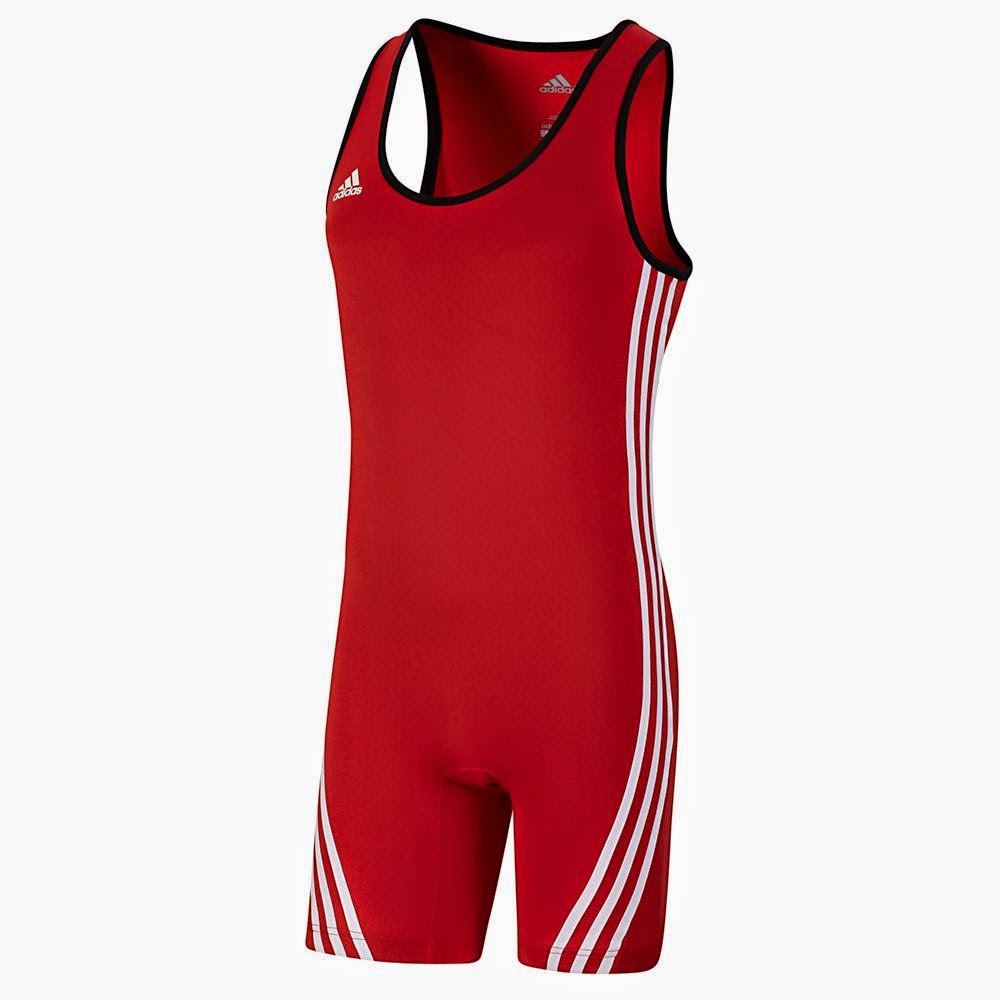
Weightlifters wear a Weightlifting Suit, a singlet. Much the same as wrestlers or rowers do. We are not wearing the suit to show off our muscles, or any other appendage for that matter. It is a part of the Competition Uniform. We have to wear them. They are not just there to make us look cool, they actually serve a purpose.

Weightlifting technique is all about keeping the bar as close to your body as possible. In doing so, the bar will inevitably brush or slide up against your thighs. Weightlifters wear suits and tights to minimize the amount of drag, or resistance against their thighs. Wearing shorts or track pants while training does nothing more than add to the resistance of the upward trajectory of the bar, and hence slow it down. Have you ever tried swimming in a pool with track pants on? Same principle, smaller scale.

When I started competing in Weightlifting things were very different. We were only allowed to wear a legless suit that looked more like a retro 1930’s ladies bathing suit than actual competitive athletic attire. Below is my suit, which I have been wearing for over 20 years now.


Having an open thigh back in the day led to many an awkward moment for a weightlifter. I will never forget when I first went to train with the National team. On the very first day, very first thing that was said to me, Salon!!!  I wasn't quite sure what the coach meant until it was explained to me. You gotta get rid of your leg hair dude. You see what happens is that if you have long hair on your legs, when you drag the bar across your thighs the knurling on the bar will effectively act like sandpaper and rip the hairs, and some skin, from your body. I have seen this happen more than my fare share and let me assure you it is not a pretty sight.
 So off to the salon I went. What followed were probably the most awkward and embarrassing moments of my youth. Let’s just say having a young lady lather you in hot wax was new to me. Followed by Pain. Lots and lots of Pain.
Wearing my original suit in April 2014.
Doing a 137.5 kg/ 302.5 lbs C&J back in 1999 in the same suit.


With freshly waxed legs I then learned all the other tricks lifters used to help the bar slide off their thighs. Powder, baby oil, Lip gloss I have seen it all being used at some stage. Today lifters are allowed to wear a full suit, including legs. So thankfully you will never have to know the pain and embarrassment of wearing a legless suit.
                     
Above is my current weightlifting suit.

Friday, December 26, 2014

Steroids and Performance Enhancing Drugs (PED's)


So the second thing people always ask me after they hear I am a Weightlifter and Coach ( right after they have said "but you're so small") is have you ever taken steroids? Unfortunately there is a certain stigma attached to doing a strength sport, Whether it be Bodybuilding, Powerlifting, Crossfit, Weightlifting or Strong man. People will always make some type of a reference to PED's.

I have never taken a PED in my life, and I never will. I could never live with myself if I did. I would never be able to accept any achievement I might have accomplished if I had taken PED. When competing internationally as a Weightlifter you are issued a Doping Control Passport. In your Doping control passport it states all of the times you have been drug tested over the years. Which is usually several times a year, in and out of competition. This makes it very difficult for a weightlifter to take PED's. Sadly there are still many athletes who are willing to take the chance of being banned for life to win a gold medal. Lets take the mind set of an athlete into consideration for a second. In Sydney at the 2000 Olympics they did a survey on the athletes and asked the question. If you could take a pill today that would guarantee  you the gold medal tomorrow, but would kill you the next day, would you take it? Over 65% said yes. Thats how much winning means to an athlete. It is everything. I love winning as much as the next athlete, but I prefer living more. So yes, many athletes will look to PED's to give them the advantage over their competitors.


I once asked an Olympic Gold Medalist what he thought about Drugs, his answer was simple " He who has the best Chemists, will always be the best". Out of respect for him I am not going to mention who is but I think his words speak for themselves. Where there are athletes, there will always be those who are looking to give them an edge by illegal means. I find it deplorable  that so many professional athletes have come out as having used PED. Their results should be stripped from the record books. As an athlete myself I find what they have done to be an insult to me as a competitor, and a complete an utter disgrace to the integrity of not only themsleves, but to the unity of Sport as a whole. Shame on you, is all I can say.


Do PED's work. Sadly Yes they Do. Are they Dangerous. Yes they Are. I have personally lost friends due to Steroids. I understand why someone would take steroids, I just personally do not think that the rewards outweigh the potential risks. More worrisome is the prevalence of Steroids in High School Athletes today.  Younger and younger kids are looking for a jump start to their athletic careers by taking PED's without any thought to the repercussions later on in their lives. The affects of prolonged steroid use are well documented. Your heart, liver and many other internal organs will fail you well before they should. It is simply not worth it.


You can still achieve great things without drugs. It will take you longer, and you will have to work much harder to get there, but thats what makes it so much more rewarding in the end. When you can stand there and say "I did this without drugs".

Wednesday, December 24, 2014

Supplements:


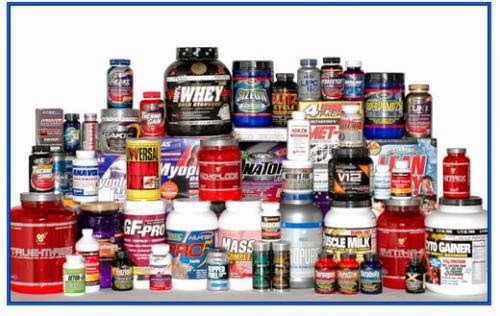
Supplements are exactly what they say they are, Supplements. They Supplement your diet, they do not become your diet. Nothing will be as important then eating enough, and eating correctly.

Taking Supplements will not automatically give you gains or increases in the gym. You are not magically going to Squat 400 just because you are taking supplements. You still have to work hard. What supplements will do is help you to train longer, and recover quicker. And lets face it, the most important part of training is recovery. I cant cover all supplements so I will simply list a few that I have taken and use, and the affects they have on me. 

Firstly and probably the most controversial is Creatine. Creatine will help to give you more energy while you are training by replenishing your creatine phosphate stores in your muscles. It is most effectively used by athletes who require more fast twitch fibre activation. Sprinters, Weightlifters, Shot Putters. While taking creatine you can expect to see a rapid increase in strength and Body-weight. When I took creatine I found the increases in strength not to be linear to my increases in body-weight. Meaning, I got bigger and stronger, but not strong enough to justify the 10 lbs increase in  body weight. As an Olympic lifter I am bound to my body-weight division. I stopped taking creatine for this reason. Creatine has also been know to leave an athlete feeling bloated and retaining water, as well as having some nasty effects on bowel movement. As an off season supplement Creatine can help to bulk up and make some increases in strength.

Secondly Glutamine. Firstly you have to understand what glutamine is. Glutamine is an amino acid; used in the synthesis of protein and thus supports the production of muscle. It supports and regulates the immune system, it is an alternative fuel source for the brain and it also supports and regulates the dietary system. Glutamine is an easily attainable amino acid. It can be found in almost all major food sources that are also rich in protein. If there is an excess of glutamine in the body, it just goes to waste. It can't be stored for an extended period of time in the body, so if you are on a maintenance diet - not trying to lose or gain weight (muscle or fat) or you are bulking (putting on muscle/fat or just muscle) then you probably do not need to use glutamine supplements. However, for those who are cutting (losing fat and attempting to maintain muscle) then glutamine is a fantastic supplement. It is for this reason that I use glutamine when I am cutting weight for competition.

Protein is the king of all supplements. If the key to muscles growth and regeneration is protein synthesis then having an abundance of protein is  the answer. You cant take to much protein, you can however not take in enough protein. I for one am guilty of this. I don't eat enough raw protein during the day so I "supplement" my diet by having a protein shake every day.
I consider Protein to be the one essential supplement for any athlete.

So based on the above, my supplemental intake during the year would look like this. Creatine and Protein during the off season to gain muscle mass and strength. Glutamine during the preseason before competition to lose body weight and maintain muscle strength. Protein over the course of the competition season to maintain and not lose strength.

Monday, December 22, 2014

Diet: Intake and Expenditure

Seeing as though it is the season to be jolly, and much eating and drinking will be taking place over the next week I thought it only pertinent to cover diet today. I personally stick to a "seefood"diet, I see food and I eat it. I literally eat what I want, when I want. I am one of the lucky ones. I have been between 135 and 145 lbs for over 20 years, and with the amount of training I do I don't expect that to change much in the next 20 years. (I hope) Most people on the other hand struggle to maintain their weight, and are on one diet or another. There are many good diets out there today to chose from. There are many Bad diets out there to chose from. I take a different approach than most. Rather than try and push people towards a certain diet, I try and get them to think more in terms of Intake and Expenditure. I use the following story to illustrate my point;
You have just started a new job, and with that job you have been given a company car. Every Monday morning you have to go to the same Gas station and put in $100 dollars worth of gas. So you drive around for a week, and next Monday you go to the station and put in another $100. Now you have the 100 plus what ever you hadn't driven out before you put the $100 in this Monday. This Continues for a Month. At the end of the Month you have about $200 worth of gas in your Car.
This is the principle of intake and expenditure If you don't expend what you take in, your body will store it for you. I ask clients to count their calories every day for a week, and then calculate how much exercise they have done in a week. Try it, I am sure you will be very surprised by the result. The number you get is your deficit. It's how many calories you didn't burn off. Once again, if you don't burn it off your body will assume you want it to store it for you, which it does rather well.
Diet is always going to be a contentious issue. People on either side of the spectrum will push their own diet and philosophies on you. Not every diet will work for you. Not every diet is going to be good for every person. Try them, test them, and make your own judgments as to which one works for you. Don't just take the word of some internet Meme with a skinny model on facebook. 
Which brings me to my last point. Stop mocking people who use a different diet or have a different opinion than you do. This is America, everyone has the right to chose whatever they want. Chastising someone because you feel that your way or diet is better is immature, and only serves to point out your own insecurities. I have plenty of opinions about diets that people wont like. I keep them to myself, and I most certainly wont be posting that opinion to Facebook every single day looking for affirmation.

Friday, December 19, 2014

Success in Failure:


Last week I covered goals and how important they are when it comes to training. Today I want to talk about failure. Failure is a part of the journey to success. Without the one you couldn't have the other. We all fail in the gym. If you don't fail in the gym you are either not pushing yourself hard enough or your Programming is seriously outdated. 
Don't look at a missed weight, or attempt at an exercise as a failure to achieve something. Failure is simply the opportunity to learn from your mistakes and better yourself in the future. OK, I missed that lift. Instead of getting to upset with yourself and storming out of the gym, think to yourself why? Why did you miss that attempt, what are you doing incorrectly. Finally come to a conclusion as to how to correct the mistake and work on that. If you can't determine what you are doing incorrectly ask your coach, that is what we are there for. 

I had a huge mental block in my career getting a 100 kg / 220 lbs Snatch. I spend years trying the weight over and over again. Something about the magical triple digit mark had me stumped. Until one day my coach decided to load the bar to 102.5 kg and tell me it was 97.5 kg. I did it easily. He new I could do the weight, he believed in me. 

Ask any Olympic Lifter how many times he has failed on a weight before he was successful. Hundreds, if not thousands of times. Failure is not a bad thing, if you think of it as such you are your own worst enemy. Embrace failure, learn from your mistakes, and from there you will find success.

Wednesday, December 17, 2014

Set Goals to Achieve Success


Training without goals is like sailing without sails, you are going to end up going around in circles. If someone asks me what I consider the most important thing when it comes to training I will say it is setting goals. Setting goals helps to keep you motivated throughout a year, or several years.
That being said, it is important to be realistic about these goals. Don’t set yourself a goal of winning the world championships, or the Crossfit games when you are starting out. Start by setting small weekly goals that are achievable. These goals can be attaining a certain weight, or doing a number of reps, anything can be a goal. I try and have one goal for every training session. If not a max weight I will try and do a new record number or reps on a weight. This way you can always do one thing in the gym that is a new achievement or accomplishment. Do 1 lbs extra on a press, or one extra rep on a Squat, I don’t care, but try and do one thing every session that is better than the last. This way when you leave you will maintain that excitement and enthusiasm until the next session.
Without this type of mental motivation many athletes become despondent, leading to them giving up or taking a break from training. These are the short term, weekly goals.

When it comes to the long-term goals, by all means think big. I want to break this record; I want to qualify for the Crossfit Games; I want to compete at World Masters. Again be realistic about where you are in your training and set attainable goals for the coming year, or years. After one year of training and competing again (After a 10 year hiatus) I set my goal for the following year to compete at the World Masters Championships and Win a Medal. Something I subsequently achieved. Right now I am already planning for which competitions, and internationals I plan on competing in next year. I have a three-year plan that culminates at the World Masters Games in New Zealand in 2017 (Hopefully with a world Championships gold, and World Record)
Goals are the key to training, set them, stick with them, and achieve them. Once you have…… Set new ones.