Thursday, January 29, 2015

Why Athletes love pain - Athletic Induced Analgesia


Athletes are well accustomed to pain. It is a part of the training process. It is the necessary evil that comes along with success. I can count on one hand how many days I have not woken up in pain. Athletes associate pain with effort. The greater the effort, the greater the pain. If I don’t wake up in some sort of pain the next day I feel like I didn't work hard enough the day before. Needless to say I wake up in pain every day of my life. Here is the difference. Athletes respond to pain differently to most people. We actually enjoy it. No seriously, we do. We thrive upon it, we live for it. It motivates us; it doesn't demotivate us like it does for most people.

You see, most people go to the gym, train go home. Then they woke up the next day in copious amount of pain and say, never again. Athletes are different.


I will never forget when I first got to University. I would squat at the end of every lifting session. At this particular point I could barely walk, but I was high on endorphin's, so I crawled. The sight of the secretary at the front desk as I came crawling out on my hands and knees was priceless. She even called the security guard. He was like,” are you OK Sir" and I was like" Yeah I am good bro, just a heavy squat session. At that particular point I was physically done, spent, finished. I would crawl outside and lie on the grass for about 20-30 minutes before I was actually capable of waking again. This tradition went on for many years, and it became quite normal for people to see me crawling out of the building. Lol – Good Times. It was largely due to this that I was given the nickname "Mighty Mouse" by the Sports Department. I would like to think it is because I am strong, not because I am small. (You can stop laughing now)


The study I read found that athletes respond to pain differently to other people. The sensory receptors usually associated with pleasure or happiness light up in the brain of athletes after a heavy training session. They Called this Athletic Induced Analgesia. A perfect example of this is Polish skier Justyna Kowalczyk. She won gold in a 10 km Cross country ski race all while having 2 broken bones on her foot. Only an athlete can endure such pain. We literally do love pain. We are very adept at being able to tell the difference between muscular pain and an injury. We know when we are merely sore from training or have an actual injury. Athletes truly do process the stimulus of pain differently than most people, and we love it.


"The pain of discipline is far less than the pain of regret"

Wednesday, January 21, 2015

Dealing with injuries:


I have never met an athlete, professional or otherwise who has never been injured at some point of their career. Like death and taxes, injuries are unavoidable and the inevitable result of pushing your body to its limit on a daily basis. Injuries, are not however the end of an athlete, nor should they be.

Lets face it, being injured sucks. There is nothing worse for a person who is active than to be injured. It demotivates you, it frustrates you, it infuriates you. The thing with injuries are how you deal with it. There are two types of injured people in this world. Those that give up and stop training completely, and those that don't. Take a guess which one of those two are more likely to succeed. 

I have seen, and been through some horrific injuries in my lifetime. Many off which I thought would be the end of my career. I have holes, and scares all over my body that I can only attribute to "Shit Happens" ( In all fairness a lot of them where actually due to my own youthful exuberance and ignorance ) I am still lifting today. Granted I am probably the most stubborn bastard I have ever come across. That being said, I had something which other people didn't, an unwavering belief in my ability to overcome. I didn't even consider injuries obstacles. They were merely an opportunity to focus my attention on other aspects of my lifts I had been neglecting. It was that mindset that got me through it. 

OK, I broke my leg. Time to get the shoulders and upper body stronger. I have tendentious in both wrists, No competitions or lifting a barbell with your arms for 6 months. OK - I am going to Squat every single day. Your L4 and 5 have fused. No dead lifts. Cool, I will have a sturdy base of support. Its about perspective, how you look at a situation. If you consider it a debilitating injury, it will be. 


If you get injured, don't give up. Don't give in. Don't let the setback demotivate you to the point that you do nothing. Do something, do anything. Go to the gym and just do squats, or pull ups, or bench. Whatever you are capable of doing. Just don't give up. I promise it is not the end.

I recently watched the Movie Unbroken, about the life of the US Athlete Louis Zamperini. I highly recommend you watching it. What that man went through, and how he overcame it with compassion and forgiveness for his own captors should serve as an inspiration to us all. There is one quote in the movie that I live by;

" If you can take it, you can make it."

Can you.

Wednesday, January 14, 2015

How Weightlifting and Crossfit Competitions Differ:

So having attended my fare share of weightlifting and Crossfit tournaments in my time I have come to some inalienable truths about each, and how they differ. First off, these are my own personal opinions. I am a weightlifter, and have not competed in Crossfit. I am merely giving my impression of what I have seen, as an athlete and spectator.

Crossfit competitions are chaotic. People are everywhere. I mean everywhere. Spectators and competitors mingle and chat among each other. In every corner a discussion is taking place. How do you train? What do you do for this? OMG your legs are hot!!! Its all going on. Having the spectators so much apart of the action almost gives things a party atmosphere. Everyone is smiling, everyone is psyched to be there. It is electric, and that enthusiasm and passion rubs off on you. It doesn't take long before you are shouting over everyone else in support of your own athlete, or friend. While there are obviously teams competing against each other, you wouldn't think so. All of the competitors are very supportive and encouraging of their opponents. To the point that they actually cheer opposing teams on. This level of comradery, and sportsmanship is something I have never seen, and I am extremely impressed by it.


Weightlifting tournaments are an entirely different kettle of fish. Teams generally stick to themselves, and do their own thing in which ever corner they have designated their own. Very little talking happens between competitors before competition. This is because the only two questions you are liable to hear are: What you starting with? and, What are your best lifts?. Many a competition has been won, and lost due to pre-competition intimidation. I can attest to this. During the competition everyone does their own thing. You always have the head phone guy in the back getting pumped to Metallica. The guy getting last minute technique adjustments by his coach. ( on a side note, you cant change an athletes technique on the day of competition. I will go into more detail in my future post on responsibilities of  a coach at competition ) And the guy having a nap in the quietest part of the hall. ( that's me ) 


Once the competition is over, it all changes. That's when the handshakes, and well done's come out. Its not a communal thing, athletes take their time and individually congratulate other competitors. It is usually during this time that the athletes suss each other out per say, and give out business cards or contact info. Weightlifting is a very small, close nit community. Its takes a while and a good few competitions before you are truly accepted.


In my heart as a weightlifter I wish that tournaments could be more like Crossfit tournaments. Where everyone comes together for the pure joy of the sport. I know that it is a competition, everyone is out to win, but I do think that we could take something from Crossfit here and try and make it a more enjoyable, gathering of like minded people, rather than an intimidating antisocial event. Sport should be about the enjoyment and comeradry of competing against your peers. It should be celebrated, not revered. Thank you Crossfit. You have taught me a valuable lesson.

Friday, January 2, 2015

Weightlifting Shoes:


Why do lifters wear shoes? Well for two man reasons. Firstly, to give you a solid base of support, and secondly to give you an added heel height.
Before I talk about the base of support I have to talk about the lifting platform. A weightlifting platform is always made of wood. Either solid wood or strips that are fashioned together. This gives you a solid base to drive against. 
Which leads directly into the first point. Weightlifting shoes have a solid heel, meaning there is no cushioning under your heel. This is important for a lifter. When you are driving your feet into the ground you don’t want to be wearing cushioned shoes, or sneakers. Why not? Well with the amount of force applied through the feet into the ground in the pull, a cushioned shoe is designed to absorb that force. Which is counterproductive to trying to lift a maximum weight. So that’s the solid base of support.
The heel height on a weightlifting shoe is to help a lifter keep the heels flat on the ground while in a full squatted position. Those who have flexibility or Achilles issues are well accustomed to how difficult it is keeping the heels flat when in a deep squat. Most lifting shoes come with either a 0.5 inch or 0.75 inch heel.
A number of Manufacturers currently make Olympic lifting shoes; here is my take on a few of them.
Reebok:
The oldest shoes I currently still use today are a pair of vintage Reebok Weightlifting Shoes. Although they have become my Squat shoes, they have served me well all over the world for almost 20 years. (Yes 20 Years) Due to their stake in Crossfit Reebok are probably the number one go to shoe currently for those doing Olympic lifting at a Crossfit Box. From what I can tell they are very good shoes, and great for those starting out. They are relatively light, and have a flexible toe, in order for athletes to combine jumping exercises with lifting.

Above are my Original Reebok Weightlifting Shoes, still going strong at almost 20 years old.
Adidas:
I spent most of my years competing in a pair of Power Perfects from Adidas. They were my favorite shoes of the 90’s and I lifted my best ever lifts in them. I loved the simple minimalistic look. Adidas have always been a leader in Weightlifting shoes. I currently have a pair of Adipower Shoes. They have a 0.75-inch heel. I have spent most of 2014 lifting in the Adipower shoes. (Pictured Above) Adidas’s answer to the Reebok Cross fit shoes is the Power lift 2 line of lifting shoes. They are lighter than the Adipower shoes, and also have more flexibility in the toe. The Power lift 2’s however only has 0.5-inch heel height.


Pendlay:
Pendlay Do-win, MDUSA Do-win Rouge Do-win, all essentially the same shoe. Made in the USA and under the great American Pendlay name. I have been using a pair of Pendlay’s for about 4 years and have recently returned to competing in them over the Adidas Adipower Shoes. I am very sentimental over my wood heel and I just like the feel of the Pendlay’s more. Also the Pendlays have almost NO toe flexibility. Coming from someone who has a tendency to end up on his toes I have found that by limited flexibility in the toe has been beneficial to my lifts.
There are a few other makes and models of lifting shoes out there, Risto Sports to name but one. However I feel that these three are the top choses for any lifter.

Wednesday, December 31, 2014

Weightlifting Belts


Weightlifters have been wearing belts for support as long as there have been competitions. Belts were originally just a piece of leather with a buckle at the end. In the 70’s The Russians added a piece of leather under the buckle to prevent pinching.  The Bulgarians improved upon that by moving the belt over to the side to prevent from hitting the buckle in the clean. In today’s world we now see belts that are made of nylon, Velcro and other non-traditional materials.


Powerlifters have a belt that is the same width across the entire length of the belt. This is because they generally use a low bar squat and don’t have to worry about getting into a full squat position. Olympic lifting belts are narrower at the ends in order for the belt to sit below the rib cage in the clean while in the full squatted position.


So when should you use a belt. I was always taught to only use your belt when attempting max lifts. By this I mean Max Squats and Max Clean and Jerks. While warming up, and lifting all other attempts up to 90% of a lifters Max, no Belt is worn. Lifting without a belt up until that point helps to decrease the lifters reliance on the belt, and increase the feeling of Support while wearing it. 99% of lifters do not wear a belt while snatching because the snatch pull happens exactly where the belt sits and it would get in the way.


When tightening the belt before a lift, don’t tighten to the point that you cannot take a breath. Make sure there is always at least room for a finger or two. Making the belt to tight can lead it to push up under your rib cage in the clean, or prevent you from taking a deep breath before the Jerk.

Happy New Years Eve Everyone. Have a  Great evening, see you in the New Year.

Monday, December 29, 2014

Clothing: The Right Fit.


I have been at the “Butt” end of many a joke when it comes to this topic. (Pun intended) Wearing the correct clothing while training and competing is imperative. Today I am focusing mainly on Suits and tights.
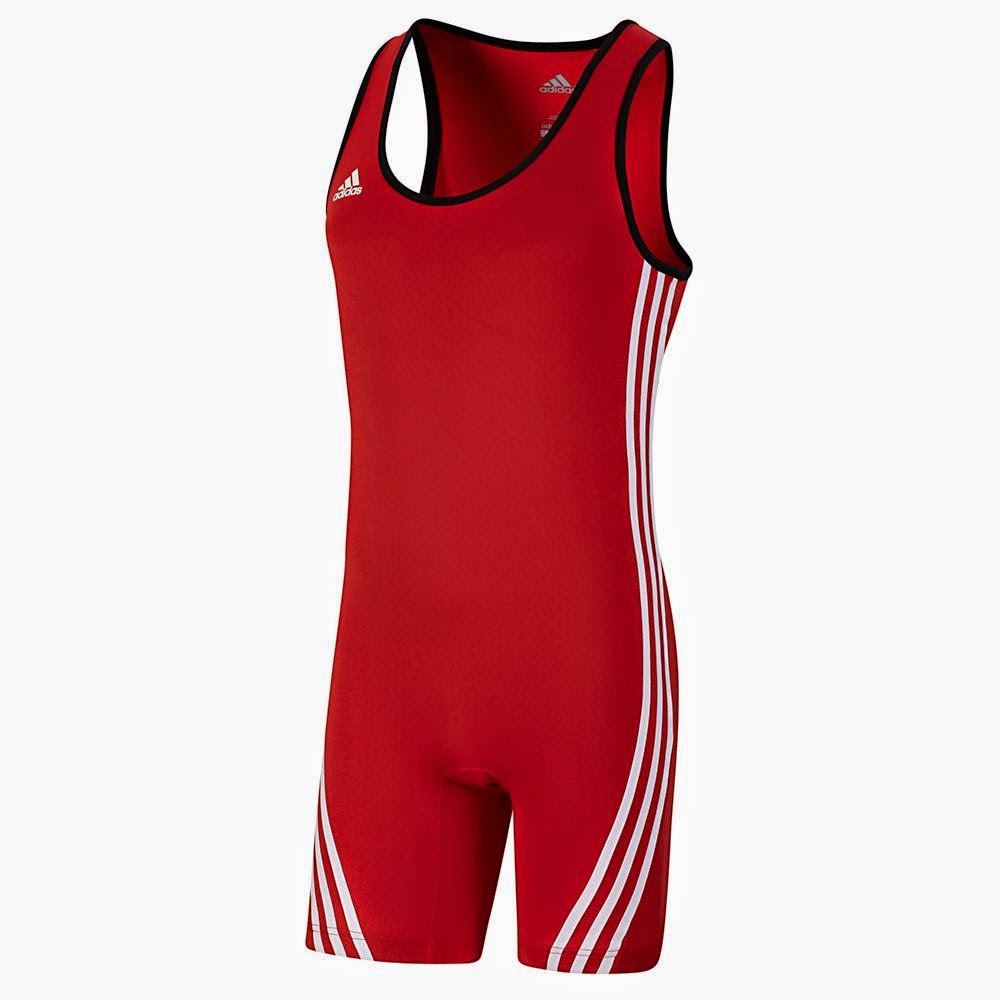
Weightlifters wear a Weightlifting Suit, a singlet. Much the same as wrestlers or rowers do. We are not wearing the suit to show off our muscles, or any other appendage for that matter. It is a part of the Competition Uniform. We have to wear them. They are not just there to make us look cool, they actually serve a purpose.

Weightlifting technique is all about keeping the bar as close to your body as possible. In doing so, the bar will inevitably brush or slide up against your thighs. Weightlifters wear suits and tights to minimize the amount of drag, or resistance against their thighs. Wearing shorts or track pants while training does nothing more than add to the resistance of the upward trajectory of the bar, and hence slow it down. Have you ever tried swimming in a pool with track pants on? Same principle, smaller scale.

When I started competing in Weightlifting things were very different. We were only allowed to wear a legless suit that looked more like a retro 1930’s ladies bathing suit than actual competitive athletic attire. Below is my suit, which I have been wearing for over 20 years now.


Having an open thigh back in the day led to many an awkward moment for a weightlifter. I will never forget when I first went to train with the National team. On the very first day, very first thing that was said to me, Salon!!!  I wasn't quite sure what the coach meant until it was explained to me. You gotta get rid of your leg hair dude. You see what happens is that if you have long hair on your legs, when you drag the bar across your thighs the knurling on the bar will effectively act like sandpaper and rip the hairs, and some skin, from your body. I have seen this happen more than my fare share and let me assure you it is not a pretty sight.
 So off to the salon I went. What followed were probably the most awkward and embarrassing moments of my youth. Let’s just say having a young lady lather you in hot wax was new to me. Followed by Pain. Lots and lots of Pain.
Wearing my original suit in April 2014.
Doing a 137.5 kg/ 302.5 lbs C&J back in 1999 in the same suit.


With freshly waxed legs I then learned all the other tricks lifters used to help the bar slide off their thighs. Powder, baby oil, Lip gloss I have seen it all being used at some stage. Today lifters are allowed to wear a full suit, including legs. So thankfully you will never have to know the pain and embarrassment of wearing a legless suit.
                     
Above is my current weightlifting suit.

Friday, December 26, 2014

Steroids and Performance Enhancing Drugs (PED's)


So the second thing people always ask me after they hear I am a Weightlifter and Coach ( right after they have said "but you're so small") is have you ever taken steroids? Unfortunately there is a certain stigma attached to doing a strength sport, Whether it be Bodybuilding, Powerlifting, Crossfit, Weightlifting or Strong man. People will always make some type of a reference to PED's.

I have never taken a PED in my life, and I never will. I could never live with myself if I did. I would never be able to accept any achievement I might have accomplished if I had taken PED. When competing internationally as a Weightlifter you are issued a Doping Control Passport. In your Doping control passport it states all of the times you have been drug tested over the years. Which is usually several times a year, in and out of competition. This makes it very difficult for a weightlifter to take PED's. Sadly there are still many athletes who are willing to take the chance of being banned for life to win a gold medal. Lets take the mind set of an athlete into consideration for a second. In Sydney at the 2000 Olympics they did a survey on the athletes and asked the question. If you could take a pill today that would guarantee  you the gold medal tomorrow, but would kill you the next day, would you take it? Over 65% said yes. Thats how much winning means to an athlete. It is everything. I love winning as much as the next athlete, but I prefer living more. So yes, many athletes will look to PED's to give them the advantage over their competitors.


I once asked an Olympic Gold Medalist what he thought about Drugs, his answer was simple " He who has the best Chemists, will always be the best". Out of respect for him I am not going to mention who is but I think his words speak for themselves. Where there are athletes, there will always be those who are looking to give them an edge by illegal means. I find it deplorable  that so many professional athletes have come out as having used PED. Their results should be stripped from the record books. As an athlete myself I find what they have done to be an insult to me as a competitor, and a complete an utter disgrace to the integrity of not only themsleves, but to the unity of Sport as a whole. Shame on you, is all I can say.


Do PED's work. Sadly Yes they Do. Are they Dangerous. Yes they Are. I have personally lost friends due to Steroids. I understand why someone would take steroids, I just personally do not think that the rewards outweigh the potential risks. More worrisome is the prevalence of Steroids in High School Athletes today.  Younger and younger kids are looking for a jump start to their athletic careers by taking PED's without any thought to the repercussions later on in their lives. The affects of prolonged steroid use are well documented. Your heart, liver and many other internal organs will fail you well before they should. It is simply not worth it.


You can still achieve great things without drugs. It will take you longer, and you will have to work much harder to get there, but thats what makes it so much more rewarding in the end. When you can stand there and say "I did this without drugs".